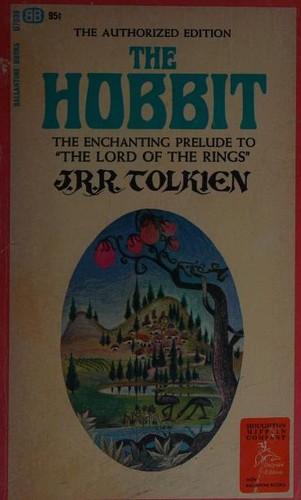
The Hobbit
In a hole in the ground there lived a hobbit.
Why read it
Bilbo Baggins wants nothing more than his armchair, his garden, and second breakfast — until thirteen dwarves and a wizard turn up uninvited and sweep him off to burgle a dragon. The book that built modern fantasy is still its most purely enjoyable doorway.
A comfortable creature discovers, one dangerous mile at a time, that courage is not the absence of a longing for home — it's carrying home inside you while doing the frightening thing anyway. Tolkien's 'there and back again' arc set the template every quest story since has followed, and the riddle game in the dark introduced a certain ring that would reshape literature.
Tolkien, an Oxford professor of Anglo-Saxon, famously scribbled 'In a hole in the ground there lived a hobbit' on a blank page while grading exams, then spent years building the story for his children from the languages and mythologies he'd invented since the trenches of WWI. Published in 1937, it sold out in months; the publisher's demand for a sequel produced The Lord of the Rings.
- 01
The reluctant burglar
Bilbo is fantasy's great ordinary hero — hired for a skill he doesn't have, he improvises his way into becoming the expedition's actual leader.
- 02
Riddles in the dark
The chapter with Gollum is a perfect short story in itself — and the moment Bilbo chooses pity over killing quietly becomes the hinge of the entire legendarium.
- 03
Smaug
The talking dragon on his gold hoard — vain, lethal, precise — set the standard every fictional dragon since has been measured against.
- 04
The Battle and the bill
The ending turns treasure into a study of greed (dragon-sickness), war into grief, and sends Bilbo home changed — 'only quite a little fellow in a wide world after all.'
Bilbo's conversation with Smaug — flattering the dragon in riddles while casing the hoard — is burglary as pure dialogue, and his one mistake ('barrel-rider') burns down a town.
The riddle game: 'What have I got in my pocket?' is technically cheating, Gollum knows it, and the fate of Middle-earth ends up hanging on that small unfairness.