Harper Ellison★ Sage · Lv 7
todayRothfuss writes sentences you want to read aloud. I didn't sleep much this week.
It's the questions we can't answer that teach us the most.
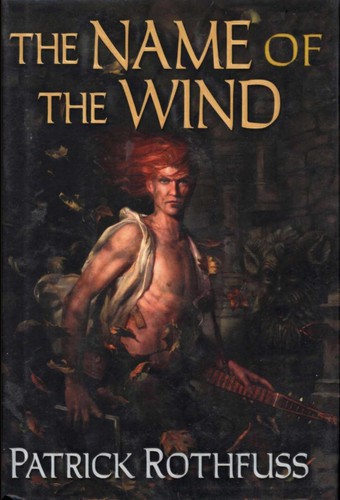
A quiet innkeeper in a backwater town is not what he seems: he is Kvothe, the most famous, and infamous, wizard, musician, and adventurer of his age, now in hiding. Over three days he sits down to tell a chronicler the true story of how the legend was really made.
Rothfuss's fantasy is a story within a story, as the older Kvothe narrates his own rise from orphaned traveling performer to destitute street child to prodigy at a university of magic. It is a coming-of-age about talent, obsession, poverty, and love, propelled by his hunt for the mysterious Chandrian who murdered his family, and by the gap between the man and the myth.
Published in 2007 as Rothfuss's debut and the first of the Kingkiller Chronicle, it grew out of a manuscript he revised for years. It won the 2007 Quill Award for science fiction/fantasy, became a New York Times bestseller, and built a devoted following, alongside long-running fan impatience for the trilogy's still-unpublished third volume.
The hidden innkeeper narrating his own legend lets the book constantly weigh reputation against reality.
Kvothe's struggle to afford and survive the school of magic grounds the wonder in real scarcity and ambition.
Rothfuss's magic system, from the physics-like 'sympathy' to the deeper art of true 'naming,' rewards intelligence over force.
The mythic, half-forgotten killers who destroyed Kvothe's troupe are the mystery pulling the saga forward.
The night the Chandrian slaughter Kvothe's traveling troupe, leaving him orphaned and haunted, is the wound that shapes his entire quest.
Kvothe's admissions interview at the University, where he is so brilliant the masters end up paying him to attend, is a signature showcase of his precocious talent.
Rothfuss writes sentences you want to read aloud. I didn't sleep much this week.