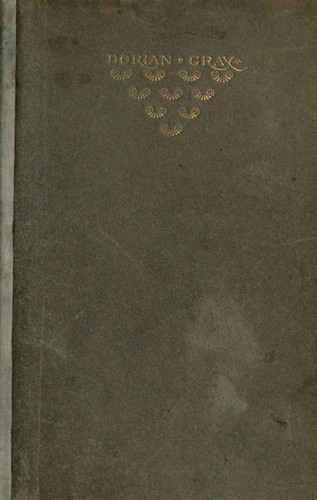
The Picture of Dorian Gray
by Oscar Wilde
The only way to get rid of a temptation is to yield to it.
Why read it
A beautiful young man wishes his portrait would age in his place — and it takes the deal. He then spends twenty years sampling every sin London offers while his face stays perfect and the canvas in the attic rots. Wilde's only novel: one gothic premise, a hundred quotable sentences, and a moral its author swore it didn't have.
Three men form the triangle: Basil the painter, who worships beauty; Lord Henry, who weaponizes wit into a philosophy of pure pleasure; and Dorian, the empty vessel who takes Henry's epigrams literally. The portrait is the conscience made visible — every cruelty registers as a new ugliness on the canvas while the world sees only the unaging face. Wilde wrote aestheticism's great advertisement and its indictment in the same book, and was made to answer for both at his trials.
Published in Lippincott's in 1890, it was denounced as poisonous and effeminate; Wilde revised and expanded it in 1891, adding the defiant preface ('There is no such thing as a moral or an immoral book'). Four years later the novel was read aloud against him at his gross-indecency trials — art entered as evidence — and its author went from London's wit to Reading Gaol within weeks.
- 01
The preface's dare
Twenty-four aphorisms on art's amorality, stapled to a story that behaves exactly like a morality play — the book's central, deliberate contradiction.
- 02
Lord Henry's influence
The novel's real devil never commits a sin on the page; he only talks. Wilde's study of influence — ideas as contagion — is the part that reads most modern.
- 03
The yellow book
Dorian is corrupted by reading (a thinly veiled Huysmans's À rebours) — literature about the danger of literature, argued by its most dangerous stylist.
- 04
Sibyl Vane
The actress Dorian loves for her performances and discards the night she acts badly — because reality has made art unnecessary to her. The book's cruelest scene and its clearest thesis on aestheticism's cost.
Dorian shows Basil the portrait — the painter's own worshipful work, now a leering ruin — and, in the novel's pivot from decadence to horror, murders him beside it. The creator killed in front of the evidence of what his creation became.
The ending: a knife into the canvas, a scream heard in the street, and servants finding a ruined old man dead beneath a portrait restored to perfect youth — identifiable only by his rings. The fable closes its own loop with total precision.