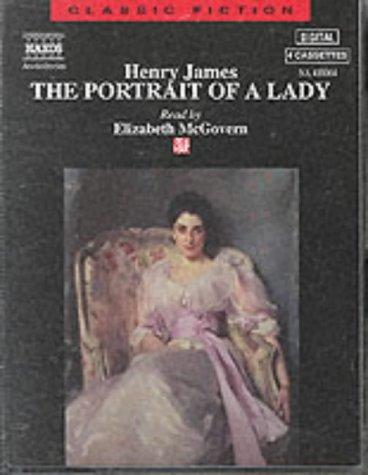
The Portrait of a Lady
by Henry James
She had a great desire for knowledge, but she really preferred almost any source of information to the printed page.
Why read it
A spirited young American woman inherits a fortune that promises her total freedom, only to find that her independence makes her the perfect prey for those who would trade on it, and she chooses, catastrophically, the most refined trap of all.
Isabel Archer arrives in Europe determined to live fully and freely, and an unexpected inheritance seems to grant her that power. But her very idealism blinds her to the schemes of the cultured, sterile Gilbert Osmond and his confidante Madame Merle, and the novel becomes a profound study of a fine consciousness discovering the prison it has walked into and deciding what integrity now requires.
Henry James published The Portrait of a Lady serially in 1880 to 1881 and in book form in 1881, later revising it substantially for the New York Edition of 1908, whose famous preface details his method. It is generally considered the finest achievement of his early period and a landmark of the psychological novel.
- 01
Freedom's double edge
What awaits is a heroine handed everything she wanted, and the slow revelation that freedom without wisdom is its own snare.
- 02
The gilded cage
Osmond's aesthetic perfection conceals a cold will to possess, turning marriage into confinement.
- 03
The hidden design
Madame Merle's role reframes the whole story, revealing how thoroughly Isabel has been maneuvered.
- 04
The final choice
Isabel's decision at the novel's end is a study in duty, dignity, and self-authorship rather than escape.
Isabel's midnight vigil by the fire, meditating on her marriage, one of the most celebrated interior chapters in the English novel.
The revelation of the true relationship between Madame Merle and Gilbert Osmond that recasts Isabel's entire history.