Harper Ellison★ Sage · Lv 7
todayInconceivable that I waited this long. Funnier than the film, somehow.
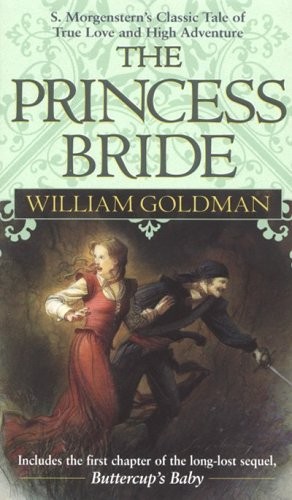
Hello. My name is Inigo Montoya. You killed my father. Prepare to die.
A grandfather reads his sick grandson a swashbuckling tale of the beautiful Buttercup and her true love Westley, complete with pirates, giants, sword fights, and a six-fingered villain. The twist: the author claims he is only abridging a boring classic down to 'the good parts,' interrupting throughout with his own wry commentary.
Goldman's cult favorite is both a genuine fairy-tale adventure and an affectionate parody of one, framed as his condensation of a fictional original by 'S. Morgenstern.' As Westley battles to reclaim Buttercup from a scheming prince, the novel winks at storytelling itself, celebrating and needling romance, heroism, and revenge all at once, with a voice that is funny, knowing, and secretly tender.
Published in 1973 by the screenwriter William Goldman (Butch Cassidy and the Sundance Kid, All the President's Men). The 'abridgment' conceit and S. Morgenstern are entirely Goldman's invention. He later adapted it into the beloved 1987 film, which cemented its status as a modern classic quoted endlessly to this day.
Goldman's fictional claim to be trimming a dull classic lets him narrate and satirize the story at once.
The Spanish swordsman's lifelong hunt for the six-fingered man who killed his father is the book's emotional through-line.
The novel is sincerely romantic and slyly skeptical about romance in the same breath.
The duel atop the Cliffs of Insanity, the battle of wits, and the Fire Swamp are pure adventure fun.
The battle of wits with Vizzini over two goblets of wine, one supposedly poisoned with iocane powder, is a masterclass of comic tension.
Inigo Montoya's final confrontation with Count Rugen, chanting his lifelong vow, delivers one of the most satisfying revenge scenes in popular fiction.
Inconceivable that I waited this long. Funnier than the film, somehow.