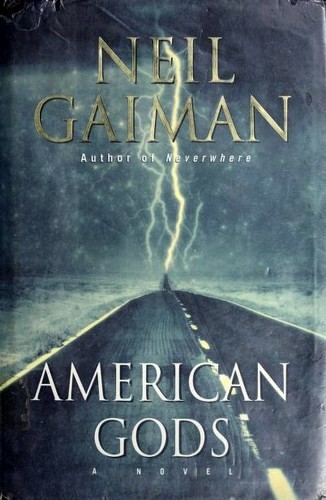
American Gods
by Neil Gaiman
I can believe things that are true and things that aren't true and I can believe things where nobody knows if they're true or not.
Why read it
Released from prison days early because his wife has died, a quiet ex-convict named Shadow takes a job as bodyguard to a con man who calls himself Mr. Wednesday. The work turns out to be recruiting the old gods of America for a war against the new ones: media, technology, and money.
The gods immigrants brought to America still walk the land, faded and forgotten, while flashy new deities of screens and commerce rise to replace them. As Shadow is pulled deeper into Wednesday's plans, a storm gathers between the old and new pantheons, and Shadow's own identity becomes the mystery at the center. It is a road-trip epic about belief, memory, and what America worships.
Neil Gaiman published American Gods in 2001; it won the Hugo, Nebula, Bram Stoker, and Locus Awards, a nearly unmatched sweep. Gaiman conceived it partly out of his own experience as a British transplant trying to make sense of the strange sacred geography of the United States, and it later became a Starz television series.
- 01
Belief makes gods
The novel's central conceit is that gods live or die by human attention, a sharp lens on what a culture actually venerates.
- 02
The forgotten immigrant story
Interludes of gods arriving with their believers reframe American history as a graveyard of imported faiths.
- 03
New gods, old hungers
Media and Technology as deities offer a pointed satire of modern worship and distraction.
- 04
A hero's hidden self
What awaits is a mystery about Shadow himself, unspooling toward a reveal that recasts everything.
Shadow being hired on a delayed flight home by the sly, one-eyed Mr. Wednesday, who already seems to know everything about him.
The gathering of old gods atop the world's largest carousel at the House on the Rock, where the roadside attraction becomes a doorway to the divine.