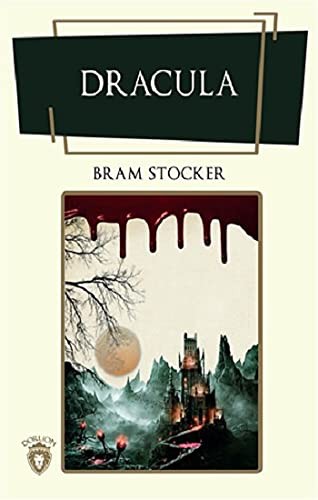
Dracula
by Bram Stoker
There are darknesses in life and there are lights, and you are one of the lights, the light of all lights.
Why read it
A young solicitor travels to a Transylvanian castle to close a London property deal and slowly realizes he is a prisoner — his host has no reflection, scales walls face-down, and is packing fifty boxes of grave-earth for the move. Every vampire you have ever met descends from this book, and none of them are as frightening.
Stoker builds the novel entirely from documents — diaries, letters, phonograph recordings, ship's logs, newspaper clippings — so the reader assembles the horror before the characters do. The Count invades modern London with ancient patience, converting women the Victorians had just begun to set free; against him, a crew of doctors, lords, and one indispensable woman fight superstition with shorthand, typewriters, and blood transfusions. It's modernity versus the medieval, and modernity barely wins.
Stoker, business manager of London's Lyceum Theatre for the magnetic actor Henry Irving (a common model for the Count's charisma), researched for seven years — Transylvanian folklore, Whitby harbor records, a name borrowed from Vlad Dracula. Published 1897 to good but not spectacular sales; it conquered culture posthumously via the 1922 pirate film Nosferatu (which his widow sued into ashes) and Universal's 1931 Lugosi.
- 01
The document machine
No omniscient narrator, only evidence: the reader always knows slightly more than any character, which is where the dread lives. Mina literally collates the novel inside the novel.
- 02
Lucy and Mina
Two models of Victorian womanhood — the desired beauty destroyed by the Count, the competent 'New Woman' who defeats him with a typewriter and a train schedule. The book's sexual politics fuel a century of criticism.
- 03
Van Helsing's method
The Dutch doctor who accepts evidence over doctrine — garlic AND blood transfusions — created the occult-detective template every paranormal investigator still follows.
- 04
Invasion literature
Dracula buys London property, studies English law and manners, and plans to blend in — the Count as reverse colonist, the empire's nightmare of being done unto.
Harker, exploring the castle by day, finds the Count in his box — gorged, younger, 'like a filthy leech' — and strikes him with a shovel that leaves only a scar. The moment horror fiction learned that seeing the monster helpless can be worse than seeing it hunt.
The log of the Demeter: the ship that carries Dracula to England arrives at Whitby in a storm with a dead captain lashed to the wheel and no other crew — a perfect self-contained ghost story in ten pages of entries.