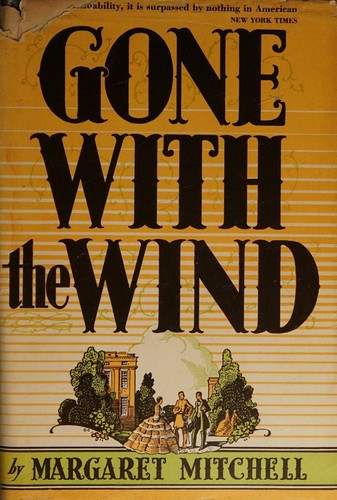
Gone with the Wind
After all, tomorrow is another day.
Why read it
Scarlett O'Hara is sixteen, spoiled, and bored by war talk on the veranda; a thousand pages later she has buried the Old South, two husbands, and every illusion except the one she can't see. Mitchell's only novel sold a million copies in six months of the Depression — and remains the best-selling American novel of its century, argument included.
It's a survival epic wearing a romance: Sherman burns Atlanta at the midpoint, and the belle becomes a woman who will lie, marry for money, and drive lumber wagons through Reconstruction rather than be hungry again. Around her, Mitchell arranges the fantasy the book both built and mourns — the 'Lost Cause' plantation myth that modern readers must meet critically — and inside her, the century's most durable romantic irony: Scarlett spends 900 pages wanting Ashley, and one page too late learning what Rhett was. Frankly, the ending has never stopped landing.
Mitchell, an Atlanta journalist laid up with a bad ankle, wrote it over a decade on her apartment's typewriter, stuffing chapters in envelopes; she gave the manuscript to a Macmillan scout in 1935, then wired him to return it — too late. Published 1936: a million copies by Christmas, the 1937 Pulitzer, and the 1939 film that fixed it in world memory. She never published another book, and died in 1949 hit by a speeding cab blocks from where she'd written it.
- 01
Survival as character
The radish vow — 'I'll never be hungry again' — turns the romance into something harder: a study of what deprivation builds and what it costs. Scarlett's ruthlessness is the Depression's favorite mirror.
- 02
The myth and its reading
The plantation idyll, the loyal-slave figures, Reconstruction as victimhood — the novel's Lost Cause frame is historically false and culturally enormous; reading it with open eyes is a lesson in how fiction manufactures memory.
- 03
Scarlett and Melanie
The book's secret spine isn't Rhett — it's the sisterhood Scarlett never asks for and can't survive without: Melanie's steel wrapped in gentleness, revealed scene by scene.
- 04
Rhett's exit
The most famous farewell in American fiction works because it's structural: he leaves exactly when she finally arrives. Mitchell refused every plea for a sequel — 'tomorrow' stays Scarlett's problem.
The flight from burning Atlanta: Rhett abandons the wagon at the edge of the city to join the army he's mocked for years, kissing Scarlett goodbye amid the flames — cynicism and romanticism swapping places in one scene.
Scarlett in the ruined garden at Tara, retching on a radish, swearing to God she'll lie, steal, cheat, or kill before hunger touches her again — the novel's hinge, and the moment the belle dies and the survivor stands up.