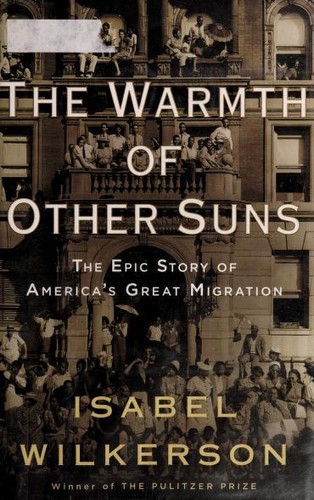
The Warmth of Other Suns
They did what human beings looking for freedom, throughout history, have often done. They left.
Why read it
Between 1915 and 1970, six million Black Americans fled the Jim Crow South for the cities of the North and West, in one of the largest internal migrations in the nation's history. It happened in plain sight, family by family, yet it was never planned, organized, or fully told, until now.
Wilkerson recounts the Great Migration through three unforgettable individuals who left the South in different decades and directions, framing their private decisions as part of a vast, leaderless movement that reshaped America. She treats the migrants not as statistics but as immigrants within their own country, seeking freedom. It is a monumental, deeply human history of a defining American exodus.
Isabel Wilkerson spent roughly fifteen years and interviewed more than a thousand people to write The Warmth of Other Suns, published in 2010. It won the National Book Critics Circle Award and appears on many lists of the best nonfiction of the century. The title comes from a line by the poet Richard Wright, himself a migrant from the South.
- 01
Migration as agency
The takeaway is that leaving was itself a form of protest and self-determination by millions.
- 02
Three lives, one movement
Following individuals makes an abstract demographic shift intimate and unforgettable.
- 03
Immigrants at home
Reframing migrants as newcomers in their own country reveals how they were received and how they endured.
- 04
How cities were remade
You see how the migration transformed the North and West, and America's culture, politics, and music.
Robert Foster's desperate, sleepless drive west toward California, turned away from motel after motel across the desert night.
Ida Mae Gladney abandoning Mississippi sharecropping after a relative is nearly beaten to death over a supposedly stolen turkey.