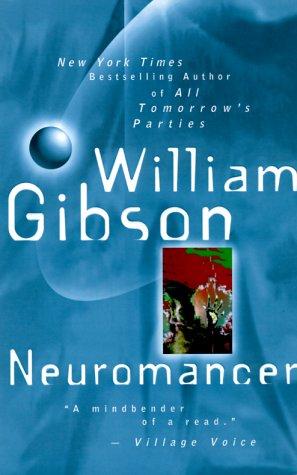
Neuromancer
The sky above the port was the color of television, tuned to a dead channel.
Why read it
A washed-up console cowboy, his nervous system deliberately fried as punishment for stealing from his employers, gets one last chance: a mysterious backer will repair him if he pulls off the most dangerous hack of his life. He never asks who is really pulling the strings.
Case, a burned-out hacker in a neon-drenched future of corporate zaibatsus and body modification, is recruited for a heist orchestrated by a force he doesn't understand. Navigating cyberspace, artificial intelligences, and a razor-fingered mercenary named Molly, he is drawn toward an AI that wants something no machine is supposed to want. It is the novel that defined cyberpunk.
Neuromancer was William Gibson's debut novel, published in 1984 and largely written on a manual typewriter. It swept science fiction's 'triple crown,' winning the Hugo, Nebula, and Philip K. Dick Awards, and popularized the term 'cyberspace,' which Gibson had coined in an earlier story.
- 01
Cyberspace made vivid
Gibson's vision of a 'consensual hallucination' of data laid the conceptual groundwork for how we imagine the internet and virtual reality.
- 02
Bodies as hardware
In a world of implants and cloned organs, the book asks what is left of the self when the flesh is endlessly upgradable.
- 03
The AI that wants
What awaits is a slow reveal of an artificial intelligence pursuing its own liberation, decades before such ideas went mainstream.
- 04
Style as substance
The clipped, allusive, sensory prose is itself an argument about a fractured, overstimulated future.
Case scoring drugs and dodging enemies in the seedy Chatsubo bar of Chiba City, a burned-out man with nothing left to lose.
Molly Millions, the mirror-eyed razorgirl with retractable scalpel blades beneath her fingernails, cutting through the Villa Straylight.