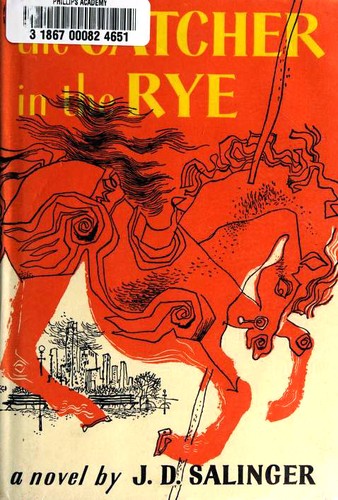
The Catcher in the Rye
Don't ever tell anybody anything. If you do, you start missing everybody.
Why read it
Expelled from his fourth prep school, sixteen-year-old Holden Caulfield spends three unsupervised days in New York City avoiding going home — and talks to you the whole way in a voice so alive that literature has been imitating it for seventy years.
Nothing much happens — hotel bars, a disastrous date, a broken record, ducks in Central Park — and everything happens. Holden is grieving his brother Allie, terrified of adulthood's 'phoniness,' and fantasizing about one job: standing in a field of rye, catching children before they fall off the cliff. Salinger's subject is the unbearable tenderness under teenage cynicism.
Salinger carried chapters in his rucksack on D-Day and through the liberation of concentration camps; the book's compressed anguish is a war veteran's, transposed onto a teenager. Published in 1951, it made him so famous he spent the remaining six decades of his life in hiding, publishing nothing after 1965.
- 01
The voice
Digressive, contradictory, obsessively honest about others' dishonesty — Holden's narration invented the modern young-adult voice decades before the category existed.
- 02
Phonies, and what they're a defense against
Holden's favorite accusation is a shield: everyone he calls phony is someone who has survived becoming an adult, which is the thing he can't imagine doing.
- 03
Allie's baseball mitt
The dead brother appears in fragments — a left-handed glove covered in poems — and reframes the whole performance as unprocessed grief.
- 04
The catcher fantasy
The title image, built from a misheard Robert Burns poem, is the book's thesis: he doesn't want to stop growing up so much as to stop everyone else from being hurt by it.
Holden watches his little sister Phoebe ride the carousel in the rain, reaching for the gold ring, and feels 'so damn happy' he could cry — the closest the book comes to peace, and it lasts one page.
He asks every adult who'll listen where the Central Park ducks go when the lagoon freezes. Nobody knows. It's the book's whole question — what happens to the vulnerable when the season turns — wearing a trench coat.