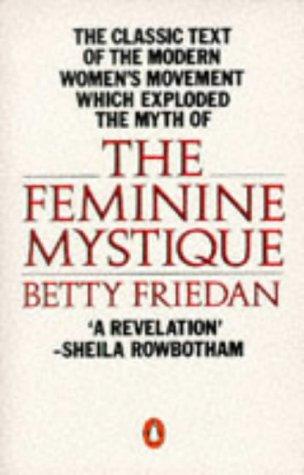
The Feminine Mystique
The problem lay buried, unspoken, for many years in the minds of American women.
Why read it
A suburban housewife has everything she was told to want, and still lies awake wondering why she feels like she is disappearing. Friedan named that feeling and lit a movement.
Friedan diagnosed 'the problem that has no name,' the deep dissatisfaction of educated American women confined to the roles of housewife and mother. The book argues that a cultural mystique idealizing domesticity was stunting women's identities, and it helped ignite second-wave feminism.
Friedan, a journalist, based the book partly on a survey of her Smith College classmates and interviews with suburban women; it was published in 1963 and sold millions of copies. She went on to co-found the National Organization for Women in 1966.
- 01
The problem that has no name
Friedan gives voice to a widespread but unspoken dissatisfaction among housewives.
- 02
The domestic mystique
She dissects how media and experts idealized full-time domesticity as women's only fulfillment.
- 03
Identity beyond the home
She argues women need meaningful work and purpose outside family roles.
- 04
The cost of confinement
The mystique, she contends, wasted the talents and minds of a generation.
She analyzes women's magazines and advertising to show how they reshaped the ideal woman from career-minded to purely domestic after the war.
She interviews suburban homemakers who describe a hollow, restless emptiness despite comfortable homes and families.