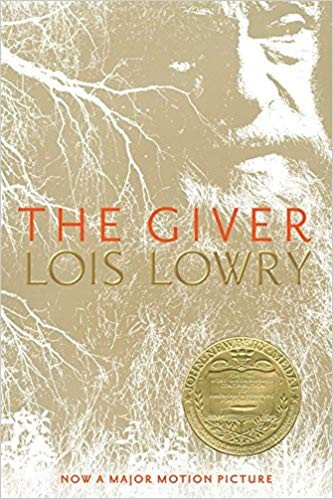
The Giver
by Lois Lowry
The worst part of holding the memories is not the pain. It's the loneliness of it. Memories need to be shared.
Why read it
In Jonas's community there is no war, no pain, no color, and no choice — every memory of the old world is held by one man, so no one else has to feel anything. At twelve, Jonas is selected to receive them all. The gentle-looking book that detonated a thousand classroom arguments — and got banned for telling children the truth about comfort.
Lowry builds utopia with a straight face: Sameness has traded color, music, weather, and love for safety, and 'release' happens offstage with a euphemism. The memories Jonas receives — sunburn, sleds, war, a wedding — arrive as pure experience, and with them the book's question: is a life without suffering a life at all? When Jonas learns what release means and who's scheduled for it, the philosophical novel becomes an escape story with a baby in a basket.
Lowry traced the book to visiting her aging father, whose memory was failing — realizing he'd been spared grief along with the past, and wondering what a society that engineered that trade would look like. Published 1993; Newbery Medal 1994; among America's most challenged books for two decades (usually for 'release' and the pill that kills the Stirrings) — and taught in the same districts that ban it.
- 01
Sameness as trade
Climate control, matched spouses, assigned jobs — every convenience is a subtracted freedom; Lowry itemizes the receipt one chapter at a time.
- 02
Memory as inheritance
The transmission scenes — snow first, war eventually — argue that wisdom can't be outsourced: a society that archives its pain in one man has no antibodies left.
- 03
The euphemism engine
'Release,' 'Elsewhere,' 'precision of language' — the community's vocabulary is the horror's delivery system, and the book is a child's course in reading past official words.
- 04
The ambiguous ending
The sled, the lights, the music — hallucination or arrival? Lowry held the line on ambiguity for years (sequels answer gently), and the argument is the point.
Jonas's first transmitted memory: a sled, a hill, snow — three things his world deleted for efficiency. Joy arrives as archaeology, and the reader feels the theft before Jonas can name it.
The release tape: Jonas watches his gentle father weigh newborn twins and inject the smaller one, chatting all the while — the scene that gets the book banned, and the exact moment its argument becomes unanswerable.