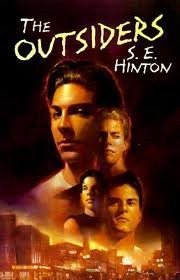
The Outsiders
by S.E. Hinton
Stay gold, Ponyboy. Stay gold.
Why read it
Ponyboy Curtis is fourteen, orphaned, greaser by birth and bookish by nature, and the Socs' fists are the least of what's coming for him and Johnny after one bad night at the fountain. Written by a girl who started it at fifteen because nobody was writing the truth about kids like hers — it invented young-adult fiction and still owns it.
Two weeks, one dead Soc, a burning church, and three brothers holding a family together on grocery wages: Hinton's Tulsa splits by money and haircut, but the novel keeps catching the same sunset from both sides of town. Narrated as Ponyboy's English theme — the book you're holding is the assignment — it argues that class war looks different from inside a fourteen-year-old: less ideology, more loyalty, and the discovery that the enemy watches the same sky. 'Stay gold' is Frost by way of a dying friend, and it holds.
S.E. Hinton began it at fifteen at Will Rogers High in Tulsa, furious that a friend got beaten for walking home, and published at eighteen — her publisher suggesting initials so boy readers wouldn't dismiss a girl's gang novel. It sold slowly, then forever (15+ million copies), created the YA category as teachers passed it hand to hand, and became Coppola's 1983 film with half of young Hollywood in it.
- 01
Class from the inside
Greasers and Socs map money onto bodies — hair grease, madras shirts, cars — and Hinton keeps the analysis at skin level, where a teenager actually experiences it.
- 02
Brotherhood as economy
Darry's sacrificed scholarship, Sodapop's dropout wages, Ponyboy's grades as the family's one asset — the Curtis household is the book's real study: love doing arithmetic under pressure.
- 03
Stay gold
Frost's 'Nothing Gold Can Stay' recited in a burned-out church, returned as Johnny's dying letter — innocence framed as something you can choose to guard, which is why the phrase tattooed itself on the culture.
- 04
The theme is the book
The last line loops to the first: Ponyboy writing this story for English class — narrative as survival tool, and YA's founding gesture: a teenager authorized to tell it himself.
The church fire: the two fugitives run INTO the flames for a picnic group's trapped kids — 'that's what you get for helping people' — and the newspaper calls the wanted boys heroes. The book's whole argument about who gets labeled what, in one blaze.
Johnny's note tucked in Gone with the Wind: 'Sixteen years on the streets and you can learn a lot. But all the wrong things…' Telling Ponyboy there's still good in the world, and to stay gold — the letter generations of readers can recite.