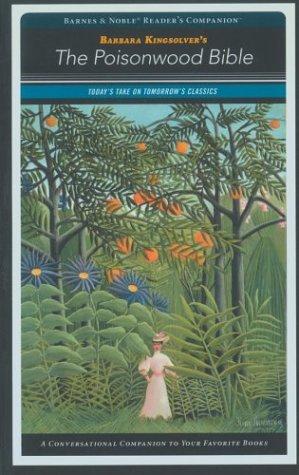
The Poisonwood Bible
Everything you're sure is right can be wrong in another place.
Why read it
An evangelical Baptist preacher drags his wife and four daughters to the Belgian Congo in 1959, certain he can save it, and utterly unprepared for what Africa will demand in return. The land, and history, will not bend to his certainty.
Kingsolver's novel is narrated by the Price women, whose voices trace the collapse of one family and the birth pangs of a nation as the Congo wins and loses its independence. It is a story about faith, arrogance, and colonial guilt, and about how each woman must reckon differently with what her father's mission destroyed.
Barbara Kingsolver published The Poisonwood Bible in 1998, drawing on her own childhood experience living in the Congo. It was a finalist for the Pulitzer Prize and the PEN/Faulkner Award, became an Oprah's Book Club selection, and is one of her best-known works.
- 01
Five narrating women
You experience the same events through mother and four daughters, each voice revealing a different facet of guilt and growth.
- 02
Faith versus arrogance
Nathan Price's rigid mission becomes a study of how certainty blinds, mistranslates, and destroys.
- 03
The personal and the political
The family's unraveling runs parallel to Congo's independence and the fall of Lumumba, binding private and national tragedy.
- 04
Reckoning and atonement
What awaits is each surviving woman's lifelong attempt to carry, or escape, her share of the responsibility.
Nathan's mistranslated sermons, in which his botched Kikongo turns Jesus is beloved into Jesus is poisonwood, the very symbol of his failure.
The death of a Price daughter from a snakebite, the tragedy that finally splinters the family and its faith.