
Miles Ovadia★ Curator · Lv 5
todayGladwell makes you see the hidden logic behind why things catch on. Addictive.
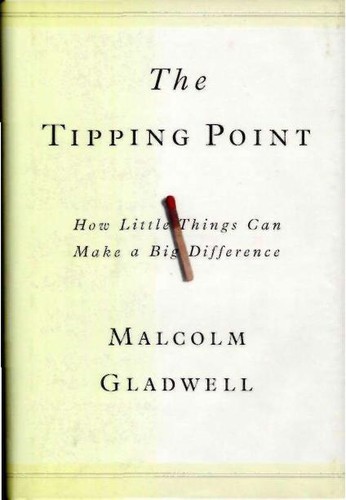
The tipping point is that magic moment when an idea, trend, or social behavior crosses a threshold, tips, and spreads like wildfire.
Why does one idea, product, or behavior spread like wildfire while a nearly identical one goes nowhere? Gladwell argues that social epidemics tip on a few small, unexpected factors, and that anyone who understands them can start one.
The Tipping Point argues that ideas, trends, and behaviors spread like contagious epidemics, tipping into mass popularity once they cross a critical threshold. Malcolm Gladwell identifies the specific people, messages, and contexts that trigger these tipping points. It offers a framework for understanding how small changes can produce outsized social effects.
Malcolm Gladwell, a staff writer at The New Yorker, published The Tipping Point in 2000 as his debut book. It became a massive bestseller and made Gladwell one of the most influential nonfiction writers of his era. The book popularized the phrase tipping point in everyday business and cultural conversation.
A small number of Connectors, Mavens, and Salesmen do the heavy lifting of spreading ideas.
Small tweaks to how a message is packaged can dramatically change whether it sticks.
People's behavior is far more shaped by their immediate environment than we assume.
Learn to see social change as contagious, with thresholds that, once crossed, tip the whole system.
The story of how Hush Puppies shoes went from near-extinction to a massive fad after a few hip New Yorkers started wearing them.
The Broken Windows theory applied to the drop in New York City crime, arguing that fixing small signals of disorder tipped the whole environment.
Gladwell makes you see the hidden logic behind why things catch on. Addictive.