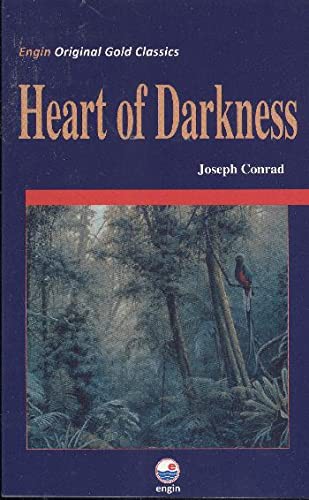
Heart of Darkness
The horror! The horror!
Why read it
A seaman named Marlow takes a job piloting a steamboat up the Congo River for a European ivory company, and the deeper he pushes into the interior, the more the veneer of 'civilization' peels away. His destination is a legendary agent named Kurtz, who has become a god to the people he plunders.
Told as Marlow's yarn to fellow sailors, the novella follows his journey toward Kurtz and the moral abyss of colonial exploitation, where greed dressed as progress reveals the savagery at the core of the imperial project. It asks how thin the line is between the civilized and the barbaric. It is one of literature's darkest examinations of empire and the human capacity for evil.
Joseph Conrad first published Heart of Darkness as a three-part serial in Blackwood's Magazine in 1899, later collecting it in 1902. It drew directly on his own harrowing experience commanding a steamboat in the Congo Free State. It has become one of the most analyzed works in English literature and inspired the film Apocalypse Now.
- 01
The lie of civilization
The 'enlightened' colonial mission is shown to be a machine of plunder, indicting empire itself.
- 02
Descent into darkness
The river voyage doubles as a journey into the human psyche and its buried capacity for cruelty.
- 03
The enigma of Kurtz
What awaits is a man of immense gifts unmade by unchecked power, whose final words haunt the book.
- 04
The unreliable teller
Marlow's framed, evasive narration keeps meaning shifting, part of the work's enduring difficulty.
Marlow stumbling upon the 'grove of death,' where exhausted, dying African laborers have crawled into the shade to expire.
The chilling discovery of severed human heads mounted on stakes surrounding Kurtz's remote station house.