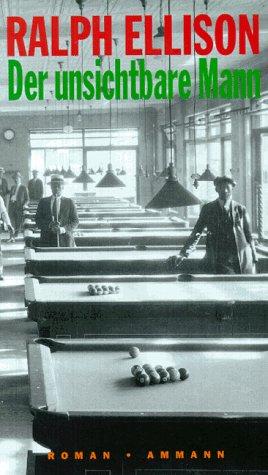
Invisible Man
I am invisible, understand, simply because people refuse to see me.
Why read it
A gifted young black man does everything right and is betrayed at every turn, by a college, by industry, by a political movement that only wants to use him. Finally he retreats underground, unseen not because he lacks substance but because no one will look.
Ellison's landmark novel follows a nameless narrator's journey from the American South to Harlem as he searches for identity in a society that refuses to see him. It is a profound meditation on race, individuality, and the many forces, well-meaning and malign, that try to define a person out of existence.
Ralph Ellison's only novel published in his lifetime appeared in 1952 and won the U.S. National Book Award for Fiction in 1953. It is regularly ranked among the greatest American novels of the twentieth century and remains a cornerstone of the study of race in American literature.
- 01
Invisibility as metaphor
You grasp how a person can be erased not by absence but by others' refusal to truly see him.
- 02
The search for self
The narrator tries on identity after identity, and what awaits is the hard-won insight that none imposed from outside will fit.
- 03
Betrayal by institutions
College, factory, and Brotherhood each promise a place and then exploit him, mapping the machinery of American racism.
- 04
Underground as clarity
In his lamp-lit cellar, the narrator finally finds the freedom to define himself on his own terms.
The brutal battle royal in the opening, where black youths are forced to fight blindfolded for the entertainment of white town leaders.
The Harlem riot near the end, an eruption of chaos through which the narrator finally slips free of the Brotherhood's designs.