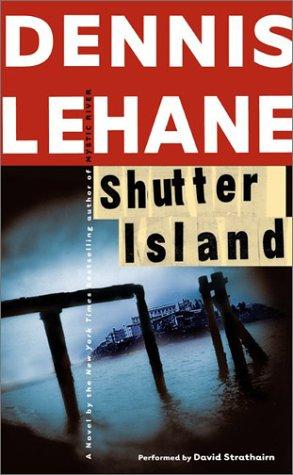
Shutter Island
Which would be worse, to live as a monster or to die as a good man?
Why read it
In 1954, two U.S. Marshals take a ferry to a hospital for the criminally insane on a remote island to investigate a patient who vanished from a locked room, but as a hurricane cuts them off, the marshal in charge starts to suspect the doctors are hiding something about why he was really sent.
Teddy Daniels arrives at Ashecliffe with his own reasons for wanting inside, haunted by his dead wife and the war, and the deeper he digs, the more the ground shifts beneath what he believes to be true. Dennis Lehane builds a gothic psychological thriller where paranoia, memory, and reality bleed together toward a twist that recasts everything. It is a mystery about whether the mind can be trusted as a witness.
Dennis Lehane published Shutter Island in 2003. A bestseller praised for its atmosphere and structure, it was adapted by Martin Scorsese into a 2010 film starring Leonardo DiCaprio, which amplified the novel's reputation for its ending.
- 01
The locked-room hook
What awaits is a vanishing that seems impossible and a conspiracy that seems bottomless.
- 02
A narrator you cannot trust
The story is told from a mind that may be the least reliable witness on the island.
- 03
Atmosphere as pressure
The hurricane and the asylum close in until paranoia feels rational.
- 04
A twist that reframes
The ending forces you to reconsider every scene you thought you understood.
The exploration of Ward C and the lighthouse during the storm, where Teddy believes lobotomies and human experiments are being performed.
The interviews about the missing patient Rachel Solando and the cryptic note, the 'law of 4,' that pulls Teddy deeper into the island's puzzle.