Theo Bennett★ Reader · Lv 2
1 day agoBleakest book I love. The last page earns every gray mile.
You forget what you want to remember, and you remember what you want to forget.
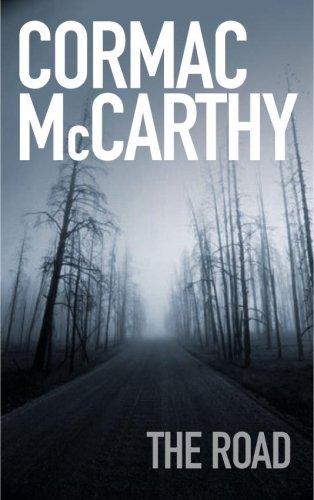
The world has burned — no animals, no crops, no sun through the ash — and a father pushes a shopping cart south with his son, a pistol with two rounds, and one job: convince the boy they're the good guys while proving it stays possible. The bleakest Pulitzer winner ever, and the most tender.
McCarthy strips the apocalypse of every explanation and the prose of nearly all punctuation: what's left is the ethical minimum — a man, a boy, a fire they say they're carrying. Every encounter (a looter, a cellar, an old man on the road) is a test with the same question inside: what may the good guys do to survive and remain the good guys? The boy is the book's conscience, born after the end, holding his father to standards mercy invented; the father is its engine, capable of anything for one person only.
McCarthy, then in his seventies, traced the book to a night in a Texas motel with his young son John, imagining fires on the hill and the city gone; the dedication is to John, and McCarthy called the boy's dialogue mostly transcription. Written fast after years circling it, published 2006: Pulitzer, Oprah's club (his only interview granted), and a permanent place in the argument about whether hope needs justification.
The phrase the father invents to make ethics portable — the book's whole moral system in three words, tested every time starvation prices it.
They don't eat people. The rule holds while everything else falls — and the boy's insistence on kindness beyond survival (the thief, the old man) keeps redrawing the line his father would let slip.
No quotation marks, sentences pared to bone, and then sudden paragraphs of ruined beauty — the prose performs the world: gray, repetitive, pierced by grace.
In flashback, she chooses death with unanswerable logic — the book lets her win the debate and then spends 300 pages refusing her conclusion anyway.
The bunker: after near-starvation, a hidden cellar of canned peaches, ham, and coffee — and the boy, before eating, saying thanks to the people who left it, 'even if you're dead.' Grace said over the ruins of the world.
The Coca-Cola scene: the father finds one can in a gutted machine and gives it to the boy, who insists they share — a whole vanished civilization, and the book's entire theory of parenthood, in one drink.
Bleakest book I love. The last page earns every gray mile.